
Worldwide Pollution
Sentinel-5P air-quality, absolute + year-on-year
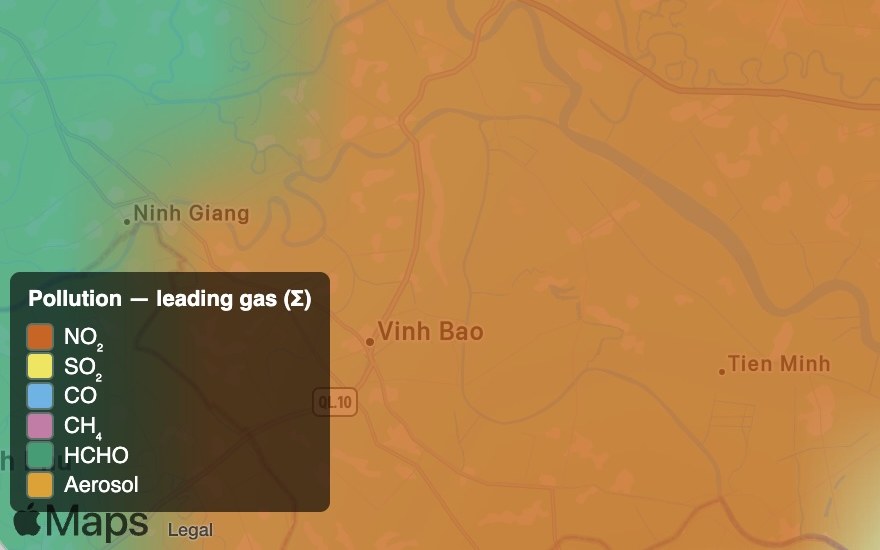
The Copernicus Sentinel-5P mission measures the trace gases that define air quality from orbit, worldwide, every day: nitrogen dioxide (NO₂) from traffic and combustion, sulphur dioxide (SO₂) from power and industry, carbon monoxide (CO), methane (CH₄), formaldehyde (HCHO), and aerosols. Together they map where pollution is produced and how it drifts.
EarthToDate delivers this as a continuously updated worldwide layer in two complementary views: the absolute reading for each gas — the current concentration anywhere on Earth — and the delta against a same-period baseline from the previous year, so seasonal cycles cancel out and genuine change stands out. A factory coming online, a traffic rebound, an industrial shutdown, or a multi-year emissions trend surfaces as a clear anomaly rather than noise.
The result is objective, comparable air-quality intelligence for regulators, health and environmental agencies, and industry — global coverage, daily refresh, and a like-for-like year-on-year change signal, with no ground sensor network required.
Frequently asked questions
What is Worldwide Pollution?
The Copernicus Sentinel-5P mission measures the trace gases that define air quality from orbit, worldwide, every day: nitrogen dioxide (NO₂) from traffic and combustion, sulphur dioxide (SO₂) from power and industry, carbon monoxide (CO), methane (CH₄), formaldehyde (HCHO), and aerosols. Together they map where pollution is produced and how it drifts.
What data and resolution does Worldwide Pollution use?
Global trace-gas monitoring — NO₂, SO₂, CO, CH₄, HCHO and aerosols — as absolute readings and change vs last year. (Sentinel-5P air-quality, absolute + year-on-year)